

By John Boyette
A course where people of all ages can learn the game of golf and its values.
An opportunity to work in the sport with access to golf course management and workforce programs.
A gathering place for the community with a nod to the past and Augusta’s rich history.
The Patch Project is all of that and more.
Augusta Municipal Golf Course, affectionately known by locals as The Patch, dates back to 1928 and has been transformed thanks to a partnership between Augusta Technical College, The First Tee of Augusta and Augusta National Golf Club.
The Patch Project, announced in 2023 by Augusta National Golf Club and Masters Tournament Chairman Fred Ridley, is bringing new life to the historic property with a mission to “strengthen public golf in the Augusta community and foster opportunities to play and work in the sport.”
“We know once this project is complete, it will strengthen this nearly 100-year-old public golf facility while keeping it affordable,” Ridley said. “This preservation will uplift those who have loved playing here while fostering opportunities for others to come enjoy the game.”
The project has partnered with some of the biggest names in golf course architecture, including five-time Masters champion Tiger Woods.
Tom Fazio Design and Beau Welling Design collaborated on the renovation of the 18-hole golf course, while Woods and his TGR Design team created the new nine-hole short course known as The Loop at The Patch.
Fazio said the “fun part” of the project — that is, coming up with a plan to transform the beloved public course — was complete by the fall of 2025.
As the facility nears its opening in the spring of 2026, Fazio can’t wait to see how it is received.
“You’re giving someone a gift, and they haven’t opened it yet,” he said. “It’s that kind of anticipation. You just can’t wait until they open that box and hit a golf ball. It’s going to be the real deal.”
Welling has worked extensively with both Fazio and Woods throughout his career and said the planning process of the project was “super collaborative.”
“With our connection with Tiger, we’ve supported the development of The Loop as well as the focus around the practice areas,” he said.
18-Hole Course
A lot has happened in a short period of time. Augusta Municipal Golf Course closed in December 2024 to begin construction on the new layout, and crews had to clean up damage from Hurricane Helene that devastated parts of Georgia, South Carolina and North Carolina earlier that year.
“What Helene did is literally give us a faster start,” Fazio said. “All these trees [were] on the ground. Normally when we clear vegetation, it’s a systematic takedown, but it was all cleared.”
Work began in earnest last spring, with a fleet of earth movers methodically shaping holes. In early summer, trucks delivering nearly 700 loads of sod arrived at the facility once or twice daily.
TifEagle bermudagrass is the choice for the putting surfaces, while Tahoma 31 bermudagrass is being used for fairways, tees and green surrounds.
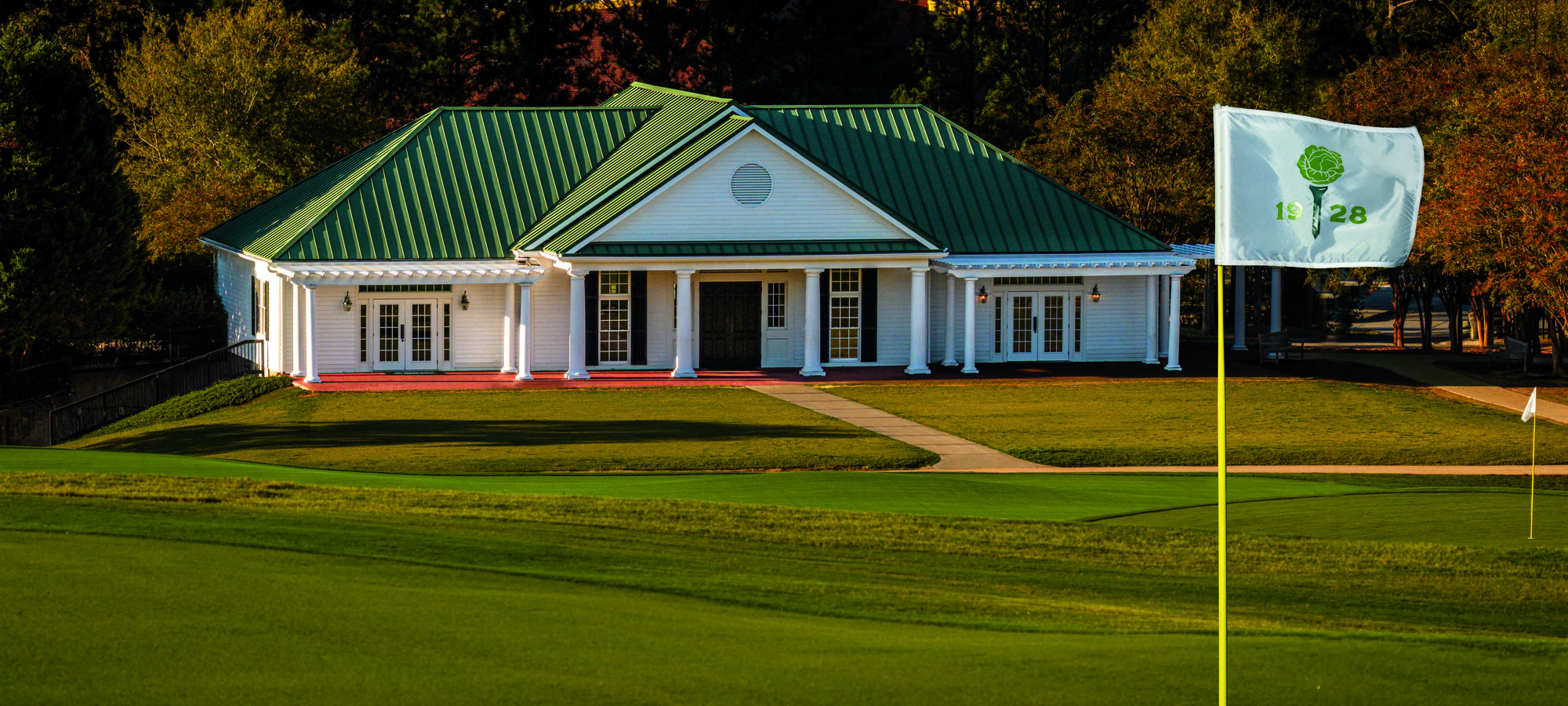
One of the key decisions made was to relocate the clubhouse and main entryway closer to Wrightsboro Road and the existing First Tee of Augusta facilities.
Keeping nearby Daniel Field in mind, including patterns and approaches from aircraft, Welling said the decision was made to “gravitate to that side of the property.” The new clubhouse location is one of the higher elevation spots and offers broad vistas of the surrounding area.
Features around the clubhouse include a 380-yard driving range oriented north-south so golfers don’t have to hit into the rising or setting sun, positioning the ninth and 18th holes to return to the clubhouse for convenience, and short-game facilities that are free to the public.
True to The Patch Project’s mission, the 18-hole layout has been completely transformed but pays homage to its history by reimagining 11 of the course’s original hole corridors. With five sets of tees, it will cater to golfers of all skill levels. The course was fully grassed by October 2025 in anticipation of its spring 2026 opening.
Fazio said that a lot of grading was done on the property to give golfers changes in elevation. New irrigation and drainage systems were installed to serve the property, improving the conditions on the course.
“It’s really going to be a great golf experience,” Fazio said. “It’s not the old Patch, of course, because it’s upgraded with new turf. It is dramatic in the playability. I think that’s what people are going to love about it. Hole after hole, it’s the real deal.”
Welling noted, “[We’re] all very mindful that we’re trying to create a super playable version of golf. It’s not overly bunkered. The idea of the ball rolling on the ground is something we’ve encouraged. For some recovery shots around the green, you can putt or use a hybrid.”
Fazio said the main course will be challenging for players regardless of their skill level. “Golfers are golfers. There’s a lot of low-handicap players who will be playing that golf course,” he said. “I believe their experience is going to be fabulous. Equally important, we have a lot of new players and young people. This will be an important golf facility for them.”
Short Course

Ridley announced Woods’ involvement on the Monday before the 2025 Masters. The Chairman and the Masters legend made a site visit to check on progress last summer.
Both liked what they saw.
Woods flipped the original conceptual routing completely, landing on a short course that plays clockwise and should allow the public to play in 45 minutes to an hour. It features artificial turf tees to accommodate the additional demand that is expected.
He and his firm have been involved with more than a dozen courses. Those include his redesign of The Hay at Pebble Beach, also a short course.
Keeping it fun and playable for beginners was a primary goal for The Loop. “Certainly on The Loop you can almost play it with a putter if you want to,” Welling said.
“You can find success.”
That success is also taking shape off the course, with the partnership creating new opportunities for the community.
A Chance to Learn
Educational opportunities will be available at The Patch through programs offered by Augusta Technical College, which is relocating its golf course management program to the revamped course. It will offer training in a “living classroom environment” while also partnering with The First Tee to create programs for students who want to learn or work in the game.
In addition to designing The Loop at The Patch, Woods and his TGR Foundation will open the TGR Learning Lab Augusta. The facility, located just a few miles from The Patch, is expected to be ready in 2028 and will offer complimentary access to high-quality programming to local students.
“Investing in STEAM education for our youth will strengthen our community and drive economic growth,” Ridley said. “It will spark innovation and deliver a skilled workforce that will serve Augusta for many years to come. These are worthy investments, and TGR Learning Lab Augusta will help make all of this a reality.”
Woods echoed those sentiments while calling attention to the personal significance of the partnership.

“Partnering with Augusta National Golf Club to serve its surrounding community is truly special,” Woods said. “My passion for education and golf dates back a long time, as does my relationship with Augusta National and the city of Augusta. This is a transformational opportunity to empower the next generation and deliver meaningful educational programming and access to fun and affordable golf. I am excited to work alongside Augusta National and see both projects become a reality.”
Community Gathering Spot
Augusta Municipal’s rich history of being a home course for many of the city’s Black golfers will be celebrated at The Patch, including honoring the late Jim Dent, for whom the main entranceway will be named. Dent won 12 times on the Champions Tour and was a fixture at the local public course.
The short course’s name, The Loop at The Patch, pays homage to Dent and so many others from Augusta Municipal who also were caddies at Augusta National.
“Being from South Carolina, I was certainly aware of the history,” Welling said. “I think that’s been on everyone’s mind since day one. I hope all will feel that when they’re on the site.”
Fazio said it was “extremely important” to preserve the course’s legacy.
“Because of the region where I live and I know so many people who are from Augusta, I’ve heard from so many since it was announced,” Fazio said. “It’s shocking how many people tell me, ‘I grew up playing The Patch.’”
He can’t wait to see their reaction when the facility opens.
“When you do a brand new golf course that nobody’s played, that’s one thing,” Fazio said. “But if you do a renovation and basically build a new golf course where there was one that people have experienced, now they have something to gain.
“I’m as excited and anxious for the comments from the people because I know people were in love with The Patch. There was something about it that was part of Augusta, part of the town. It’s very important. I can’t wait for them to see it.”
Welling, too, is excited to see The Patch Project come together and offer many different aspects of golf for the community.
“In my mind, even if you’re not playing golf, I can see it as a place to go and have a hot dog and hang out,” Welling said. “I think we’ve knocked it out of the park on creating this facility. From a golf architecture standpoint, it will be fun and accessible for many different people regardless of skill level.”
Both the clubhouse and the adjacent facilities will serve as a “community center, a hub of activity,” according to Welling.
“The idea is it’s like a portal into the world of golf, whatever that might be,” he added. “For a player or someone who wants to be involved in the industry, it’s just going to be a great entry point into the game and a great addition to living in Augusta.”
John Boyette is executive editor of the Aiken Standard and has covered the Masters Tournament since 1986.